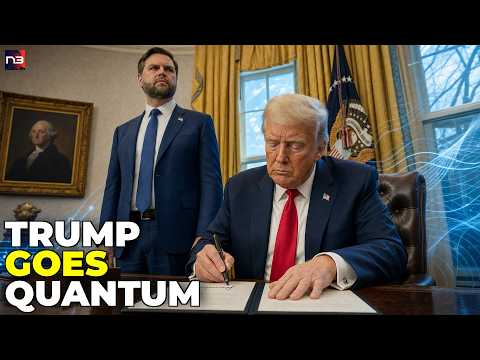
President Trump used an Oval Office signing to advance a White House push on quantum technology and cybersecurity, framing the day’s top action as a national security investment meant to strengthen American leadership in a critical field.
In this Next News Network White House Rundown, carried by streaming partner Trump Daily Posts, the administration’s public schedule and pool reports showed a day centered on executive action, national security messaging and a broader argument about measurable domestic results. According to the daily guidance, the President began Monday with Executive Time at the White House before a 3:30 p.m. executive order signing in the Oval Office, followed later by two policy meetings, also in the Oval Office, at 5 p.m. and 6 p.m. Reporters were called in shortly before the signing, and pool coverage indicated the White House was preparing to place a major presidential action formally on the record. During the event, the President announced what the White House described as a major investment in American quantum leadership, joining technology development to defense and research priorities. Energy Secretary Chris Wright, Defense Secretary Pete Hegseth, Commerce Secretary Howard Lutnick and OMB Director Russ Vought were present, along with representatives from Google and IBM, underscoring the administration’s effort to align national security, industry and advanced technology. The White House cast the orders as steps to protect the country against emerging cryptographic threats while reinforcing U.S. leadership in quantum innovation.
The same Oval Office appearance also served as a platform for the administration’s latest message on Iran. Pool reports said the President highlighted two objectives: keeping the Strait of Hormuz open and ensuring Iran does not obtain a nuclear weapon. He also said any funds unfrozen under current negotiations would be directed toward food purchases from American farmers. In follow-up remarks, the President said he would act if Iran violates the memorandum of understanding or otherwise misbehaves, adding that the nuclear threat outweighed economic risk. Secretary Wright said oil and natural gas flows had returned to pre-crisis levels and could rise further. The White House also continued to rely on Vice President JD Vance’s engagements in Switzerland to reinforce that message. Earlier in the day, the White House had announced Vance would deliver remarks at 1 p.m. local time. In those remarks and later tarmac comments before departing from Emmen Air Base, Vance said Iran had agreed to allow IAEA inspectors back into the country, with discussions able to begin as soon as today, and said talks were continuing to keep the Strait of Hormuz open during the conflict. He added that frozen funds would remain frozen absent clear progress and that Qatar had been asked to help establish a mechanism to ensure any money is used as intended. Vance also said progress was being made toward a Lebanon ceasefire through a deconfliction mechanism involving Israel, Lebanon, Saudi Arabia and the Emirates, and he pushed back on suggestions of any diplomatic snub, saying meetings with Iranian negotiators continued for nine hours and that trust would depend on actions rather than words.
On the domestic front, the White House said the administration’s border enforcement agenda is contributing to lower rents nationwide, tying that claim to a decline of more than 50 percent in net international migration in 2025, rising housing vacancy rates and lower monthly costs for many of the country’s 46 million renters. The President also briefly addressed vandalism at the reflecting pool on the National Mall, saying the damage included a 350-foot slit that appeared to have been cut with a box cutter or knife and that the pool would need to be drained and repaired. Taken together, the past 24 hours reflected a White House effort to present a connected record on security, innovation, diplomacy and cost-of-living concerns, with official guidance, presidential remarks and vice presidential travel all reinforcing the same themes. More of the day’s broader White House and Washington coverage follows.